



















-100x100.png)


































Choosing the correct thruster tunnel is one of the most important steps when installing a bow or stern thruster. Tunnel diameter, length, and installation position all directly affect thrust efficiency, noise levels, vibration, and the long-term reliability of the entire system.
Many boat owners start by looking at tunnel diameter first. In practice, however, the correct process always starts with finding the right installation location, then measuring the required tunnel length on the boat, and only after that confirming the correct diameter according to the thruster model.
This guide explains the correct step-by-step approach to selecting a GRP (Fibreglass) thruster tunnel and avoiding common installation mistakes.
Step 1: Finding the Correct Installation Position
Before choosing tunnel length or diameter, the exact installation position inside the hull must be defined.
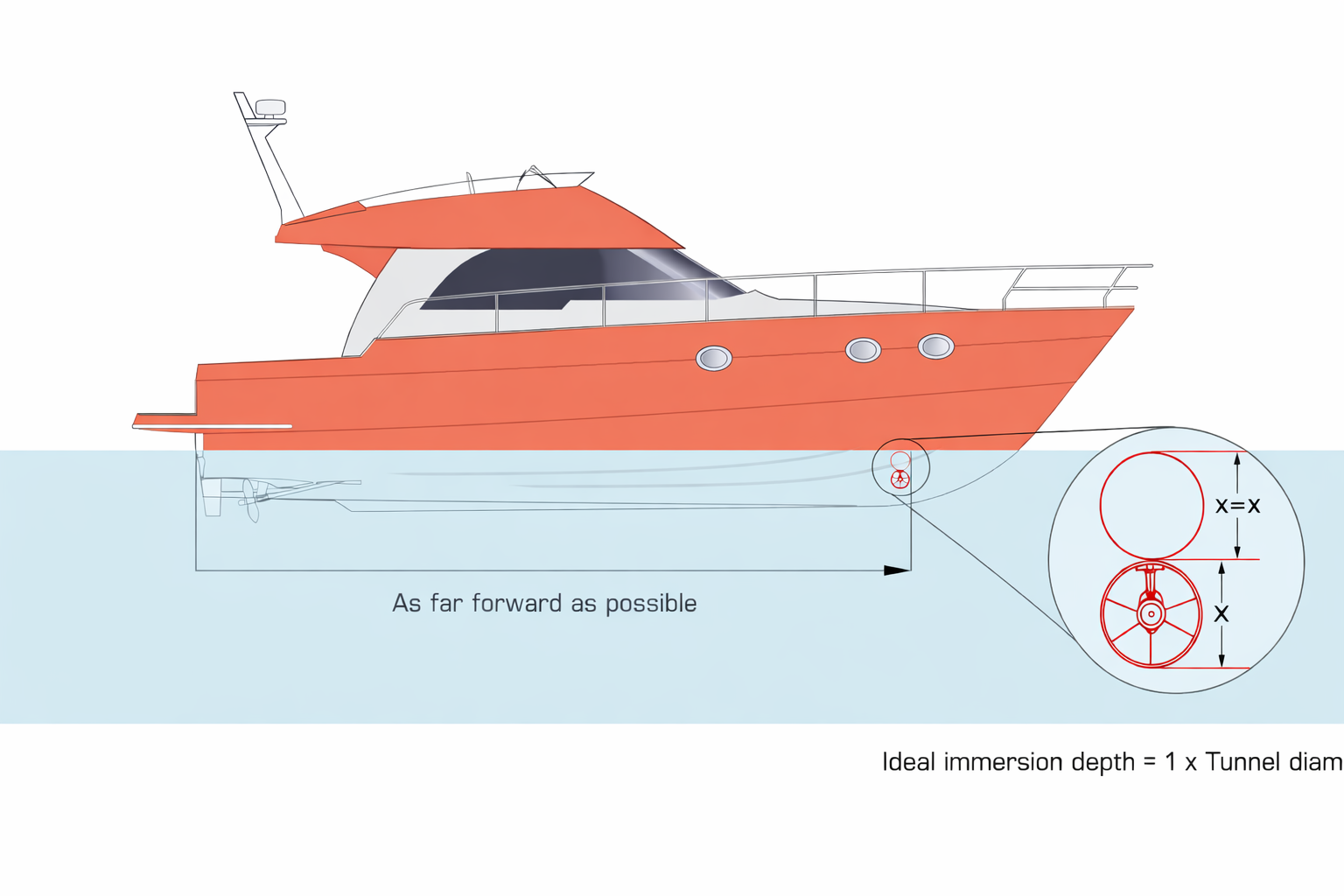
When selecting the location, it is essential to consider:
-
hull shape and bow geometry
-
internal reinforcements, stringers, and bulkheads
-
minimum distance from the waterline
-
available internal space for the thruster motor and service access
-
clean and symmetrical water flow through the tunnel
A thruster installed too close to hull steps, chines, or other disturbances will lose efficiency and may create additional noise or cavitation.
Until the installation position is fixed, it is impossible to determine the correct tunnel length.
Step 2: Measuring the Required Tunnel Length on the Boat
Once the installation position is confirmed, the next step is to measure the tunnel length directly on the boat.
Tunnel length depends on:
-
hull thickness at the installation point
-
internal reinforcement zones
-
tunnel alignment angle
-
allowance for precise trimming and final positioning
In professional installations, it is common practice to select a tunnel slightly longer than the measured requirement. This allows the installer to:
-
trim the tunnel accurately on site
-
achieve perfect alignment with the hull
-
ensure symmetrical protrusion on both sides
This approach provides flexibility and helps achieve a clean, professional installation result.
This video is embedded from YouTube and is used for demonstration purposes.
Step 3: Why Tunnel Diameter Must Match the Thruster Model
Tunnel diameter is not a universal value and should never be selected “by eye” or with extra margin.
Each thruster model is engineered to operate with a specific tunnel diameter. Using an incorrect diameter may result in:
-
reduced thrust output
-
increased noise and cavitation
-
inefficient water flow
-
higher mechanical load on the motor
Manufacturers such as Max Power design their thrusters and tunnels as a matched system. For this reason, tunnel diameter must always be selected according to the thruster model, not the other way around.
GRP (Fibreglass) Thruster Tunnels – Size Overview
The table below provides an overview of common GRP (Fibreglass) thruster tunnel sizes used with Max Power thruster systems. It is intended as a general reference before final measurements are taken on the boat.
| Tunnel Diameter | Wall Thickness | Available Lengths | Typical Application |
|---|---|---|---|
| Ø110 mm | 4 mm | 750 / 1000 mm | Compact boats, limited bow space |
| Ø125 mm | 5 mm | 500 / 750 / 1000 / 1250 / 2500 mm | Most common size for small & mid-size boats |
| Ø185 mm | 6 mm | 750 / 1000 / 1500 / 2500 mm | Higher thrust systems, improved control |
| Ø250 mm | 7 mm | 1000 / 1500 / 2500 mm | Large boats, reinforced hulls |
| Ø300 mm | 9 mm | 1500 / 2000 mm | High-power thrusters for large yachts |
| Ø315 mm | 9 mm | 1500 / 2000 mm | Heavy-duty and custom professional installations |
Important: This table is for orientation only. Final tunnel selection must always be based on actual hull measurements and thruster model requirements.
Why Installation Position Comes Before Length and Diameter
To summarise the correct selection sequence:
-
Determine the optimal installation position inside the hull
-
Measure the required tunnel length directly on the boat
-
Select the thruster model
-
Choose the tunnel diameter specified for that thruster
Following this order helps prevent costly mistakes, rework, and performance issues after installation.
Why Fibreglass Tunnels Are the Preferred Solution
GRP thruster tunnels are widely used in professional marine installations because they offer:
-
excellent corrosion resistance
-
strong structural integration with the hull
-
smooth internal surfaces for efficient water flow
-
precise trimming and fitting during installation
They are suitable for both bow and stern thrusters and provide long-term reliability when installed correctly.
When to Seek Professional Advice
If you are unsure about:
-
the correct installation position
-
the required tunnel length
-
matching tunnel diameter to the thruster model
it is always advisable to consult a professional installer or technical specialist before ordering components. Correct planning at this stage saves time, cost, and potential installation issues later.
Conclusion
Choosing the right thruster tunnel is not just about selecting a diameter from a list. It is a structured process that starts with analysing the hull, continues with accurate measurements, and finishes with selecting the correct tunnel for a specific thruster model.
By following this approach, you ensure optimal thrust performance, reduced noise, and a reliable docking system that will serve your boat for many years.