














-100x100.png)




























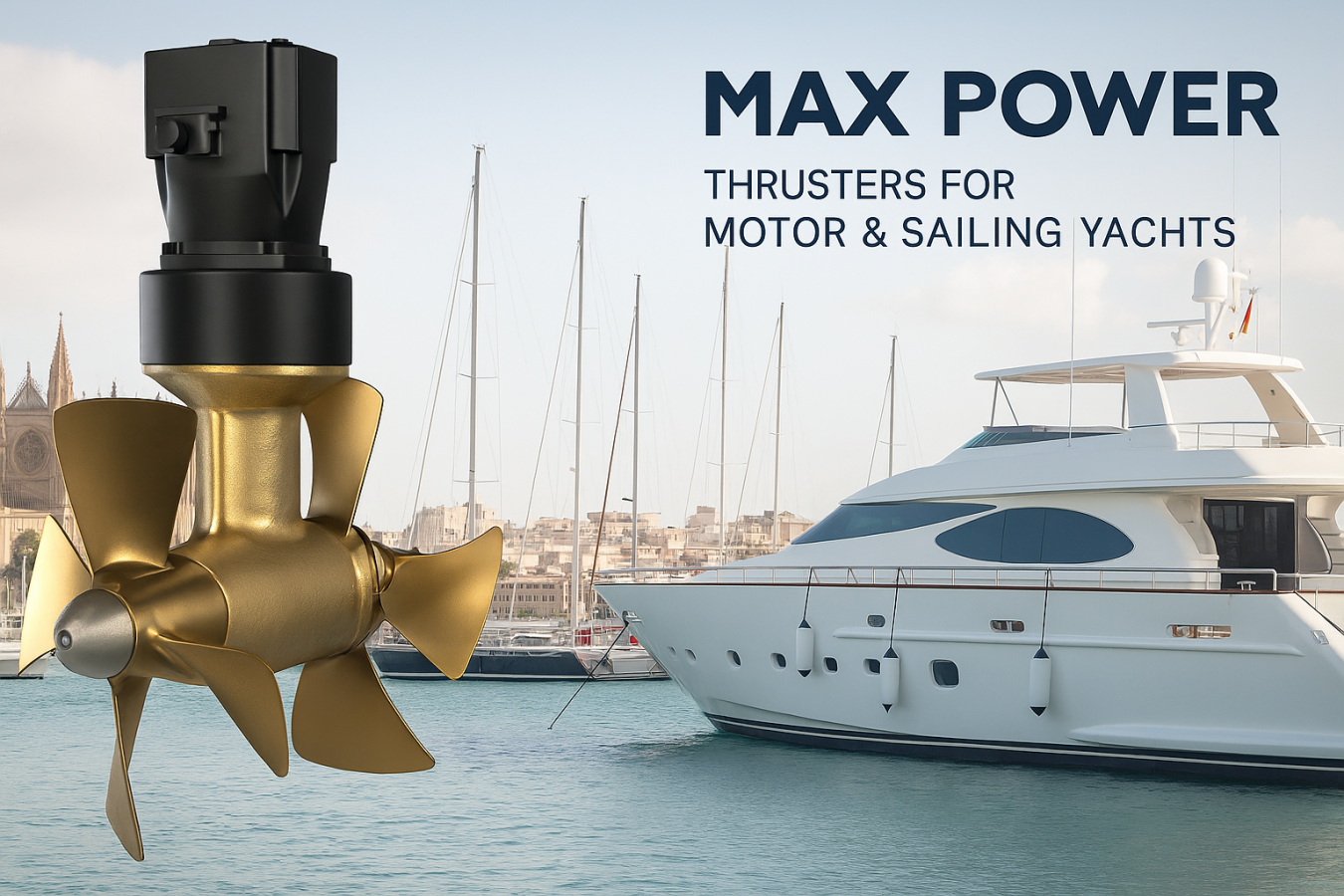
Selecting the right bow or stern thruster is one of the most critical decisions in yacht handling and docking performance. A properly sized thruster transforms maneuvering from stressful to effortless — especially in tight Mediterranean marinas, narrow channels, strong crosswinds or charter conditions. A poorly sized thruster, however, delivers slow response, weak push, overheating, or even total failure during a critical moment.
As an official Max Power dealer, Gaelix Marine Service supports boat owners, captains, shipyards and refit specialists worldwide, ensuring that every vessel receives the correct thruster system for its displacement, windage, installation geometry and power infrastructure.
This extended technical guide explains how to correctly size and choose a Max Power thruster — DC, AC, hydraulic or retractable — for motor yachts, sailing yachts and catamarans from 20 ft to 80+ ft.
1. Understanding the Max Power Thruster Families
Before choosing a model, it is essential to understand the full Max Power range. Max Power produces four main categories of thrusters:
A) DC TUNNEL THRUSTERS (12V / 24V / 48V)
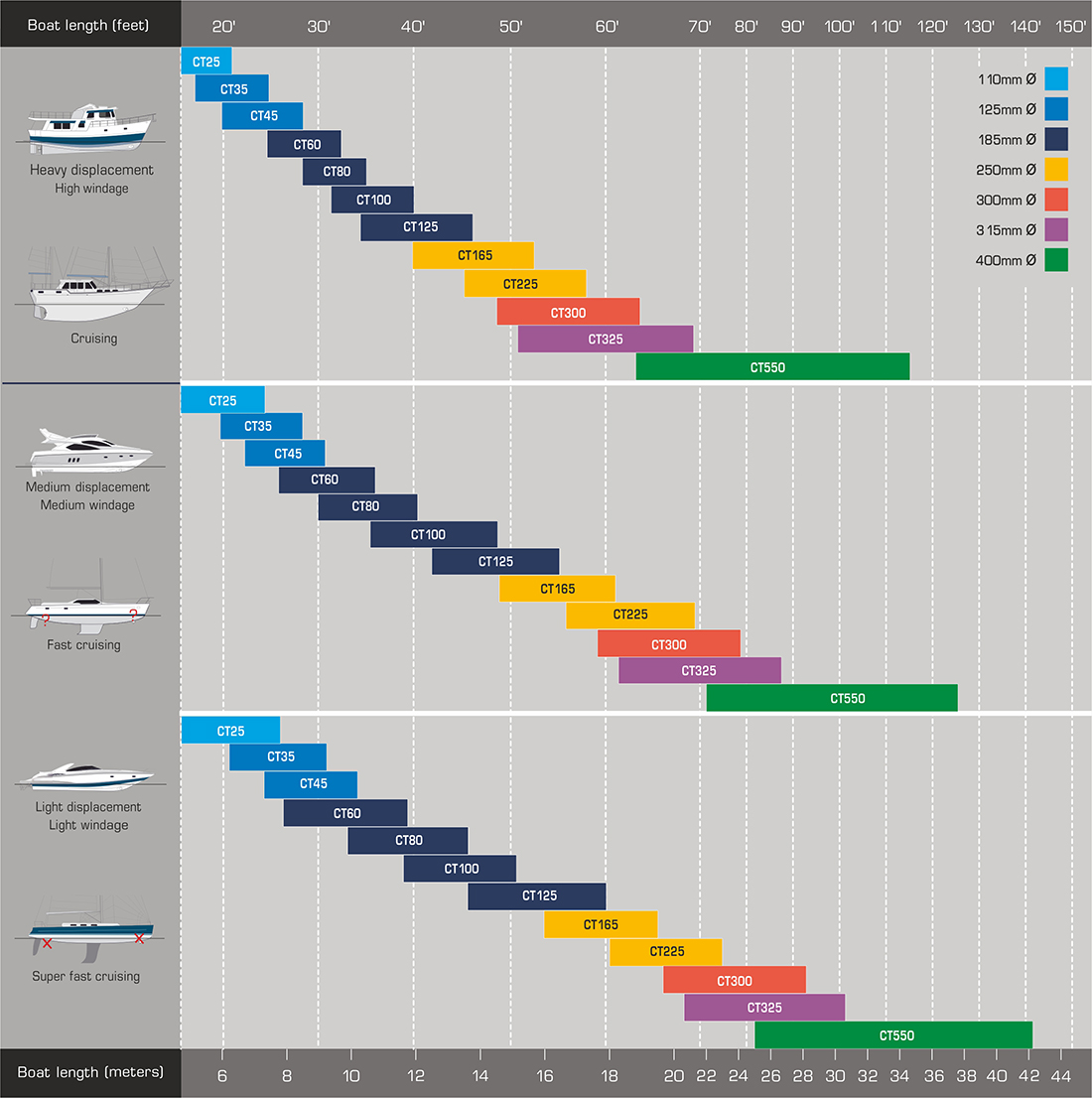
For yachts 5.5–30 m (or smaller heavy vessels), the DC tunnel thruster range includes:
-
CT25
-
CT35
-
CT45
-
CT60
-
CT80
-
CT100
-
CT125
-
CT165
-
CT225
-
CT300
-
CT325
These units offer excellent performance on motor yachts and catamarans, but have limited duty cycles (usually 30–60 seconds) to prevent overheating.
B) AC ELECTRIC TUNNEL THRUSTER
One model stands in a category of its own:
⭐ CT550 AC (30 kW, 450 kgf, Ø400 mm)
-
Most powerful electric tunnel thruster Max Power offers
-
380–440V 3-phase AC
-
Counter-rotating DUO propellers
-
450 kgf of thrust
-
Composite drive leg
Ideal for yachts 25–40 m where owners prefer electric systems over hydraulic.
C) HYDRAULIC TUNNEL THRUSTERS
Hydraulic tunnel models provide identical thrust values as their DC equivalents, but with continuous-duty operation — the key advantage of hydraulic systems.
Hydraulic tunnel range includes:
-
CT HYD 125
-
CT HYD 225
-
CT HYD 300
-
CT HYD 325
-
CT HYD 550
-
CT1000 HYD (top of the line)
Hydraulic systems are recommended for:
-
superyachts 35–80+ m
-
commercial vessels
-
boats with frequent maneuvering
-
vessels already equipped with hydraulic PTO pumps
D) RETRACTABLE THRUSTERS (Electric & Hydraulic)
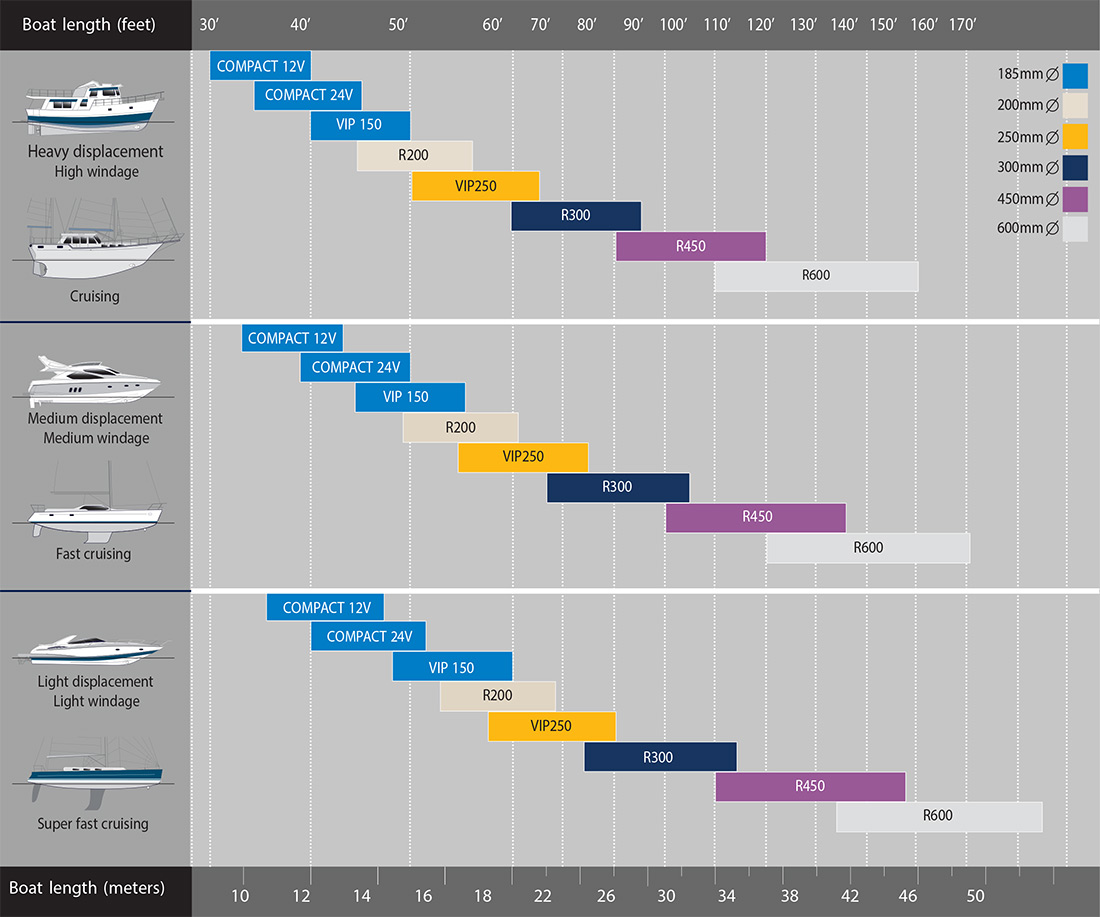
Retractable models eliminate tunnel drag and place the propeller deeper in the water.
Electric Retractable:
-
VIP 150 Electric
-
VIP 250 Electric
-
VIP 150 ECO
-
VIP 250 ECO
-
Compact Retract
Hydraulic Retractable:
-
VIP 150 HYD
-
VIP 250 HYD
-
R200
-
R300
-
R450
-
R600
Retractables are the #1 recommended option for sailing yachts.
2. Boat Length vs Thrust: The First but Not Final Rule
As a starting point, here is a general guideline for thrust vs yacht length:
| Boat Length | Recommended Thrust | Typical Models |
|---|---|---|
| 17–30 ft | 25–45 kgf | CT25 / CT35 / CT45 |
| 28–40 ft | 50–75 kgf | CT60 / CT80 |
| 38–50 ft | 90–125 kgf | CT100 / CT125 |
| 48–65 ft | 140–165 kgf | CT165 |
| 60–80 ft | 200–325 kgf | CT225 / CT300 / CT325 |
| 75–110 ft | 325–550+ kgf | CT550 AC / CT HYD 300–550 |
| 110+ ft | 600–1000 kgf | CT HYD 550–1000 |
But length alone is not enough.
Windage, displacement and bow shape often demand a stronger thruster.
3. Windage: The Most Underestimated Factor
Windage — the area of the boat exposed to wind — has more influence on thruster selection than length.
High-windage vessels include:
-
flybridge yachts
-
sailing catamarans
-
expedition-style trawlers
-
yachts with wide beam
-
tall freeboards
-
sailing yachts with large topsides
For these vessels, it is common to size one thrust class higher.
Example:
A 48 ft flybridge yacht → CT100 on paper, but CT125 or CT165 performs much better in real 20–25 knot side wind.
At Gaelix Marine Service, we always size using windage first, length second.
4. Tunnel Diameter and Installation Geometry
Thruster efficiency depends heavily on:
-
tunnel diameter
-
depth from waterline
-
tunnel length
-
hull thickness
-
fairing shape
-
water flow path
For Max Power DC thrusters:
-
CT25 → Ø110 mm
-
CT35–CT45 → Ø125 mm
-
CT60–CT80–CT100–CT125 → Ø185 mm
-
CT165--CT225 → Ø250 mm
-
CT300 → Ø300
-
CT325 → Ø315
-
CT550 → Ø400 mm
If the tunnel is too high, thrust escapes to the surface → 40–60% power loss.
If the tunnel is too narrow, the thruster cavitates → loud & weak performance.
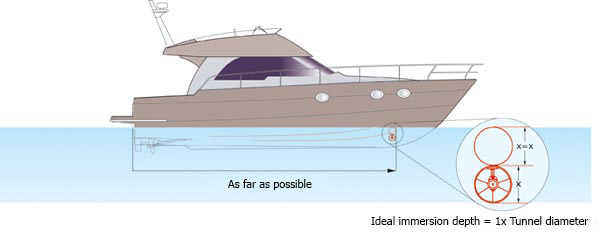
Tunnel placement is critical — we will include this detail in the blog:
-
at least 1/3 of diameter below waterline
-
as far forward as structurally possible
-
no fairing bumps or turbulence pockets
5. Electric DC vs Electric AC vs Hydraulic: Understanding the Real Differences
✔ Thrust numbers are the same.
CT125 DC = CT125 HYD
✔ The difference is NOT the thrust. It is:
-
duty cycle
-
thermal stability
-
energy supply
-
torque consistency
-
installation complexity
Electric DC (CT35–CT325):
-
limited duty cycle (20–60 seconds)
-
voltage drop affects performance
-
ideal up to 25–30 m
-
simple installation
Electric AC (CT550):
-
industrial-grade power
-
450 kgf thrust
-
more stable than DC
-
but still not fully continuous-duty
-
excellent for 25–40 m private yachts
Hydraulic (CT HYD & R-series):
-
continuous-duty
-
no overheating
-
instant torque
-
best for large yachts & commercial vessels
6. Retractable Thrusters: The Gold Standard for Sailing Yachts
Sailing yachts benefit most from retractable thrusters:
Why they are better:
-
No drag under sail
-
Propeller sits deeper → no cavitation
-
Quiet and smooth
-
Perfect performance even in waves
-
No tunnel weakening the bow structure
-
Less noise in forward cabins
-
Ideal for racing yachts
Which retractable to choose:
-
35–45 ft → VIP 150 Electric
-
45–55 ft → VIP 250 Electric or ECO version
-
55–75 ft → VIP150/250 HYD or R200
-
75–100 ft → R300 / R450
-
100+ ft → R600
Retractables are also excellent for motoryachts where hydrodynamics and noise are priority.
7. Real Scenarios (from Gaelix Marine Service Experience)
Scenario A: 48 ft Flybridge in Crosswind Harbors
On paper → CT100
In reality → CT125 or CT165 due to windage and bow flare.
Scenario B: 62 ft Sailing Catamaran
Massive windage + wide beam → CT225 or CT300
Stern thruster optional but useful.
Scenario C: 74 ft Motor Yacht with Generator
Owner prefers electric → CT550 AC
Alternative → CT HYD300 for continuous use.
Scenario D: 52 ft Sailboat with Shallow Tunnel
Tunnel too high → DC thruster loses efficiency →
Solution: Retractable VIP250 Electric
8. Stern Thrusters (Stern CT range)
A stern thruster dramatically improves maneuverability on:
-
flybridge yachts
-
catamarans
-
wide-beam vessels
-
yachts with full keel
Most stern installations use:
-
CT60–CT165 DC
-
CT225 DC for large motor yachts
-
HYD models for bigger yachts
Stern thrusters are often used with bow thrusters for “sideways movement”.
9. Max Power Joystick Docking Systems
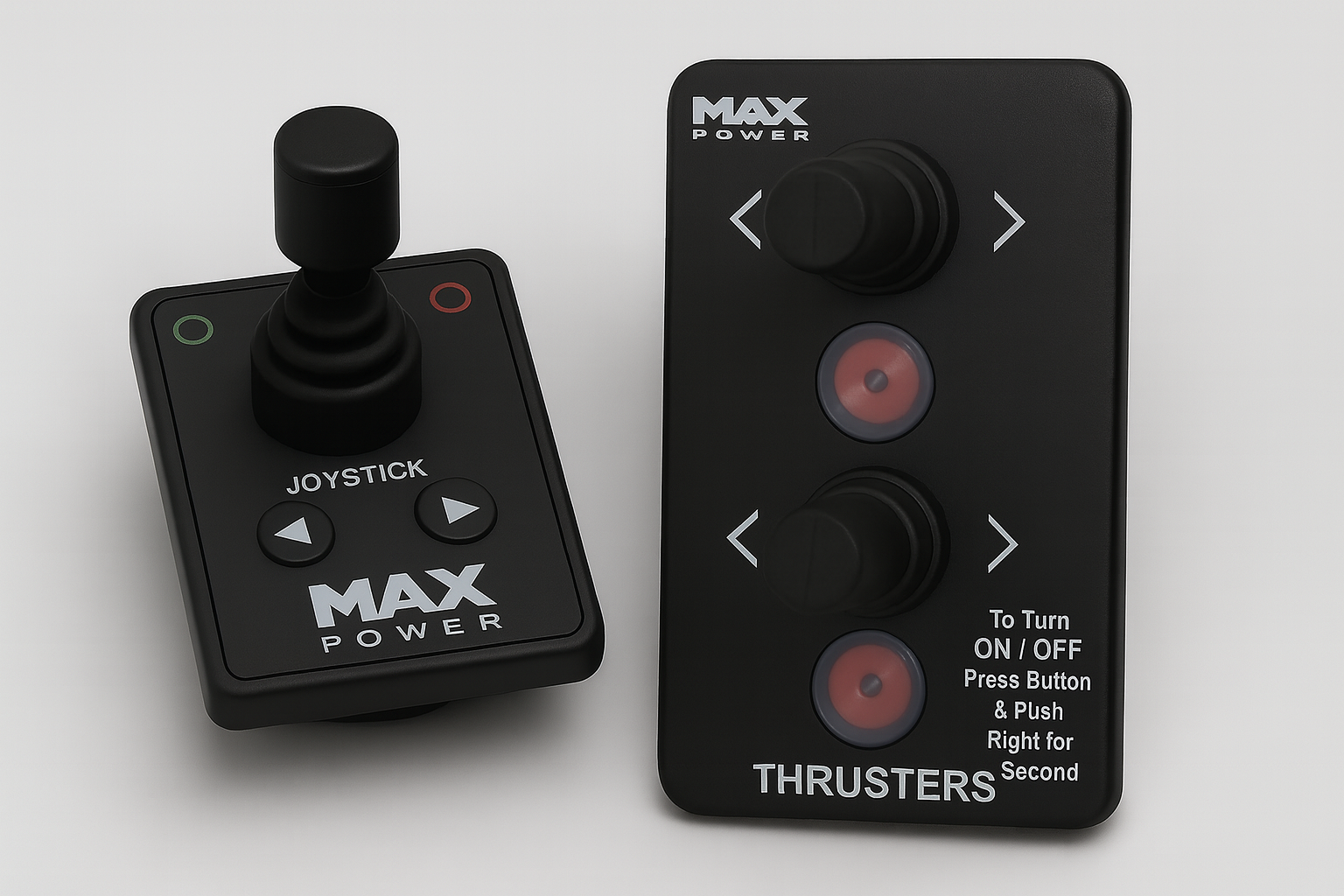
Joystick systems allow:
-
sideways motion
-
diagonal movement
-
pivoting
-
single-handed docking
Max Power offers:
-
proportional controls
-
dual-station units
-
ECO-friendly packages
-
integration with big thrusters
If installed with CT225+, CT300, CT325 or CT550 → joystick control is excellent.
10. Common Owner Mistakes When Choosing a Thruster
-
Choosing by length only.
Windage more important. -
Underestimating tunnel height.
High tunnel = 40–60% power loss. -
Too small batteries/cables.
Voltage drop reduces thrust drastically. -
Ignoring duty cycle.
DC thrusters cannot run continuously. -
For sailing yachts → choosing tunnel instead of retractable.
Tunnel cavitates, noisy, inefficient. -
Oversizing without checking tunnel diameter.
Big thruster in small tunnel = wasted power.
11. Gaelix Marine Service: Authorized Max Power Partner
As an official dealer, Gaelix Marine Service provides:
-
professional thruster sizing
-
tunnel design guidance
-
retractable system selection for sailboats
-
electric/hydraulic system configuration
-
installation support
-
worldwide delivery
-
full refit cooperation with shipyards
We do not simply sell a thruster —
we configure a complete maneuvering system ready for real life at sea.
Conclusion
Choosing the right Max Power thruster requires a deep understanding of hull geometry, windage, available power, installation feasibility and vessel type. With the complete Max Power lineup — DC, AC, hydraulic and retractable — every yacht from 20 ft to 80+ ft can be equipped with a perfectly matched thruster.
For expert guidance, installation support and worldwide delivery,
Gaelix Marine Service is your trusted authorized Max Power partner.
Write a comment