










-100x100.png)


















Integrated Marine Safety Solutions with LALIZAS and Gaelix Marine Service
Fire at sea is one of the most critical emergencies a commercial vessel can face. A ship is a confined environment where heat, smoke, and toxic gases can spread rapidly through ventilation ducts, cable passages, engine room compartments and accommodation spaces. When a fire occurs offshore, there is no external firefighting assistance immediately available. The crew must respond quickly and correctly, with equipment that is reliable, certified, and ready for use.
For this reason, every commercial vessel — whether a cargo ship, tanker, passenger ferry, tug, supply vessel, offshore support ship or service barge — must have a complete and functional fire safety system on board. This system includes breathing apparatus, escape equipment, protective firefighting clothing, and firefighting gear such as hoses, nozzles, couplings and extinguishers.
At Gaelix Marine Service, we supply complete, compliant, and ready-to-use fire safety packages based on certified LALIZAS equipment. We support ship operators, fleet managers, technical departments, shipyards and inspection agencies in ensuring vessels meet and maintain SOLAS, MED and EN standards. Our approach is not limited to providing equipment — we help build a system that works in real emergency conditions.
Understanding the Real Risk: Fire at Sea
Fire does not behave the same way onboard as it does on land. Steel bulkheads, closed compartments and limited ventilation create extreme heat buildup. Synthetic materials and lubricants produce toxic smoke. Machinery spaces contain high-pressure fuel lines, hot surfaces and electrical panels — a combination that can turn a small failure into a rapidly developing fire.
The real danger in most maritime fire incidents is not flames — it is smoke and toxic atmosphere.
Smoke:
-
reduces visibility to almost zero
-
disorients the crew
-
leads to rapid loss of consciousness due to lack of oxygen
-
prevents safe evacuation or access to the fire
Therefore, breathing protection is the first and most essential component of any fire response strategy on board.
Self Contained Breathing Apparatus (SCBA)
Breathing protection for firefighting and rescue operations
The LALIZAS Self Contained Breathing Apparatus 300 bar is designed for firefighting teams operating in smoke-filled environments. This SOLAS/MED-approved apparatus provides stable breathable air under positive pressure, ensuring that no smoke or gases can enter the mask.
Key Features:
-
Positive pressure open-circuit system
-
Ergonomic composite back frame: lightweight, flame-resistant, antistatic and waterproof
-
Whistle alarm (>90 dB) warns when cylinder pressure is low
-
Durable face mask providing full visibility
-
Approved for marine use and packaged in a heavy-duty protective storage case
Cylinder Options:
-
6L steel cylinder (rugged and cost-effective)
-
9L carbon composite cylinder (lighter for extended operations)
-
Compatibility with a wide range of 300 bar cylinders as per EU standards
SCBA allows the firefighting team to:
-
enter the engine room safely
-
search for trapped personnel
-
isolate or shut down fuel supply
-
perform rapid cooling and suppression
-
confirm conditions once the fire is under control
Without SCBA, no effective firefighting action inside a compartment is possible.

Emergency Escape Breathing Device (EEBD)
Escape protection for crew in smoke-filled areas
Unlike SCBA, which is designed for active firefighting, EEBD is designed for quick evacuation from a hazardous atmosphere. The LALIZAS Escape-15 EEBD provides 10–15 minutes of breathable air, allowing crew members to exit a smoke-filled space safely.
According to SOLAS requirements:
-
At least one EEBD must be located in the engine control room
-
Additional EEBD units must be placed along escape routes
-
EEBD must be clearly marked, easily accessible and always ready for immediate use
In real-world emergencies, EEBD often makes the difference between successful evacuation and inability to escape.

Protective Clothing for Marine Firefighting Teams
A firefighting team cannot act effectively without the right level of personal protection. Heat, radiated thermal energy, falling debris and electrical hazards require certified gear that maintains mobility while shielding the wearer.
Standard Marine Firefighting PPE includes:
-
LALIZAS Antipiros Fireman’s Jacket & Trousers (EN469:2020)
Designed for extreme heat exposure and long-duration operations. -
Fireman’s Helmet (SOLAS/MED)
Provides head protection, high-temperature resistance and neck shield. -
Fireproof Hood and Gloves (EN 13911, EN 1149)
Protect face, ears and hands from heat and radiant energy. -
Fireman’s Boots (SOLAS/MED)
Non-slip, heat resistant, suitable for wet and oily surfaces. -
Fireman’s Belt with Lifeline (EN358)
Secures the firefighter in confined spaces or ladders. -
Fireman’s Axe with holster
Allows access through panels, hatches and ventilation enclosures.
Each item has a specific role, and the complete set is necessary for safe operation.

Firefighting Equipment and Water Delivery Systems
Firefighting requires more than protection and breathing equipment — it requires the ability to apply water or foam safely and effectively.
A complete onboard firefighting system includes:
-
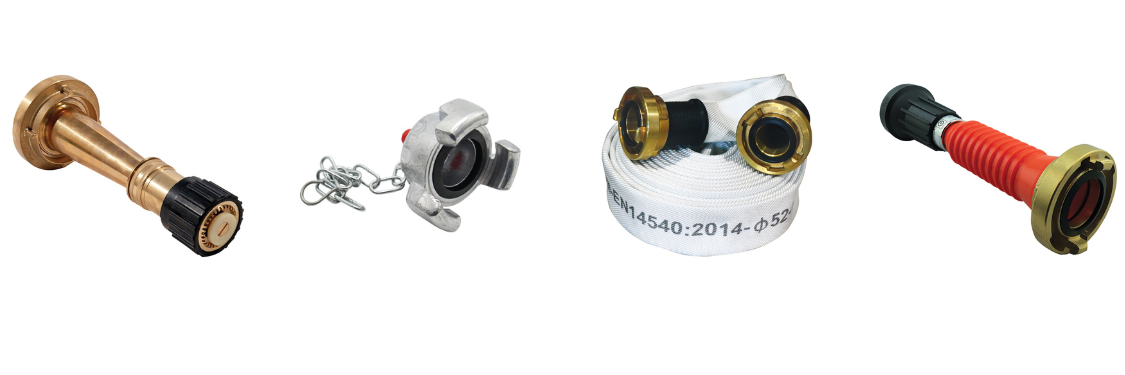
Fire hoses (with or without couplings)
-
Coupling adapters to match vessel piping systems
-
Nozzles with fog/stream selection for protection and suppression
-
Hydrant stations located according to the vessel’s fire control plan
Why nozzle type matters:
-
Jet stream penetrates hot zones to cool equipment
-
Fog spray reduces radiant heat and shields the firefighting party
Selecting the correct nozzle is operationally critical — and often overlooked until an emergency reveals its importance.
Fire Extinguishers and Foam Systems
Portable and wheeled fire extinguishers are required for rapid first response.
Modern maritime standards increasingly demand PFAS-free foam solutions, which LALIZAS provides across multiple capacities.
A complete onboard extinguishing strategy typically includes:
-
Dry powder 6kg & 12kg units
-
CO₂ extinguishers for electrical and engine spaces
-
Foam extinguishers for fuel and oil-based fires
-
Wheeled extinguishers for high-capacity suppression needs
Correct storage, signage and accessibility are essential.

Implementation, Maintenance and Crew Preparedness
A system is only effective if:
-
The equipment is functional
-
The crew knows how to use it
-
Positioning and accessibility comply with the Fire Control Plan
Gaelix Marine Service assists with:
-
Equipment selection and fleet standardization
-
Compliance with flag and class inspection requirements
-
Replacement of expired cylinders and EEBD units
-
Advisory support for drills and crew training routines
We work with ship operators to build real operational readiness, not just checklist compliance.
Why Choose Gaelix Marine Service
-
Authorized supplier of LALIZAS marine safety equipment
-
Worldwide delivery including Europe, Cyprus, Middle East, Africa
-
Direct support for commercial fleets, shipyards and fleet management offices
-
Only certified and inspection-ready products
-
Technical guidance from engineers with real marine background
Your vessel must be ready before the emergency happens.
That readiness begins with the right equipment — and the right partner.
Conclusion
Fire safety at sea is a responsibility shared by the entire crew, but it depends on the quality and reliability of the equipment on board. With certified breathing apparatus, escape devices, protective gear and firefighting systems, crews can respond effectively, protect human life and preserve the vessel.
Gaelix Marine Service ensures that your vessel is equipped not just to comply — but to be prepared.

Write a comment